Have you ever said you felt “bad” or “off” but couldn’t quite explain why? Or maybe you’ve struggled to put your emotions into words during a tough conversation or therapy session. That’s where the Feelings Wheel comes in.
At The Inner Bloom Room Counseling, we believe that naming our emotions is a powerful first step toward healing and the Feelings Wheel is one of our favorite tools to support that journey.
What is the Feelings Wheel?
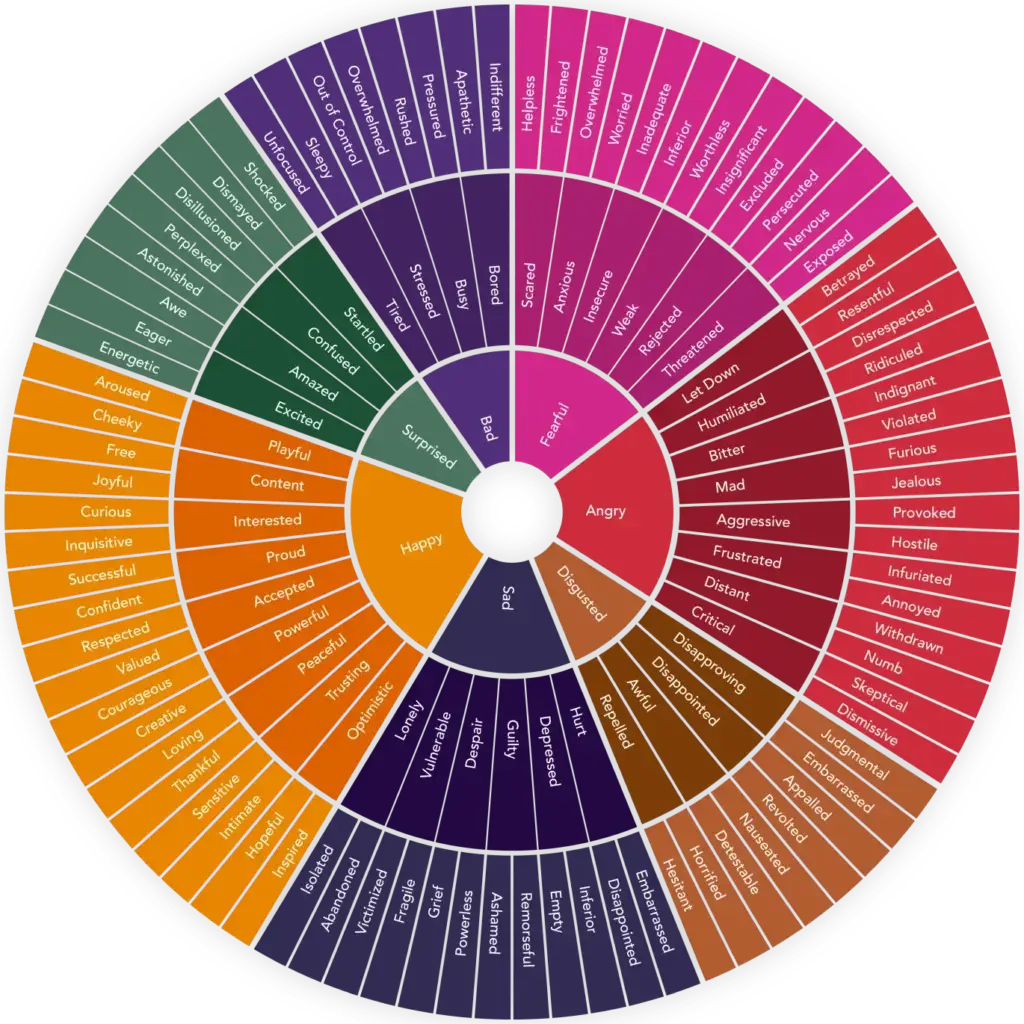
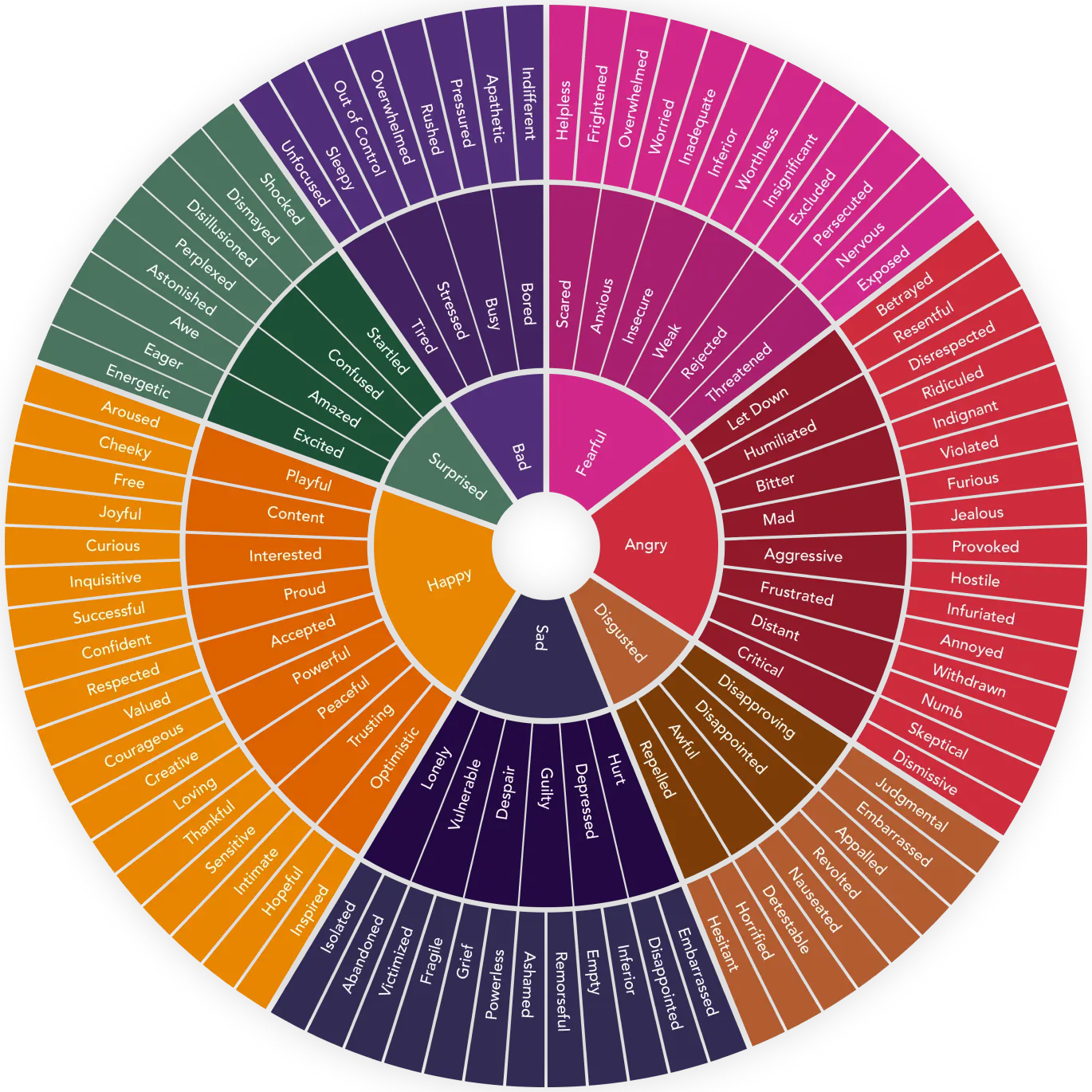
The Feelings Wheel is a visual guide created by psychologist Dr. Gloria Willcox. It organizes core emotions and their related feelings into a colorful, circular diagram designed to help you identify and expand your emotional vocabulary.
At the center of the wheel, you’ll find six core emotions:
- Sad
- Disgusted
- Angry
- Fearful
- Bad
- Surprised
- Happy
As you move outward, these core emotions branch into more nuanced feelings like insecure, grateful, anxious, or hopeful. It’s a simple, yet deeply effective way to move beyond broad labels and get to the heart of what you’re truly experiencing. (Some of the core emotions may differ depending on which wheel you are using).
Why Does This Matter?
When we can clearly name what we feel, we’re better able to:
- Express ourselves in relationships
- Ask for what we need
- Recognize patterns in our mood or behavior
- Work through emotional triggers
- Build emotional intelligence and self-compassion
Whether you’re navigating grief, anxiety, burnout, or relationship struggles, the ability to articulate your emotions can create more clarity and peace.
How to Use the Feelings Wheel
Try these gentle steps to start using the Feelings Wheel in your daily life:
- Pause and check in– When something feels “off,” take a moment to sit quietly and ask: What am I feeling right now?
- Start from the center– Choose a core emotion that feels most accurate, then follow the branches outward to find a more specific word.
- Get curious, not critical– There are no “bad” emotions. Allow yourself to notice what’s present without judgment.
- Use it in journaling or therapy – The Feelings Wheel can deepen your self-reflection and help guide conversations with your therapist.
- Keep it visible – Print one out and stick it on your fridge, mirror, or inside your journal. Let it become part of your emotional vocabulary.
A Gentle Reminder
Emotional awareness isn’t about fixing how you feel, it’s about honoring it. Using tools like the Feelings Wheel doesn’t mean you need to analyze every emotion, but it does give you a way to acknowledge them with more clarity and care.
At The Inner Bloom Room, we hold space for emotional exploration with warmth, intention, and compassion. Whether you’re learning to reconnect with your feelings or processing something tender, we’re here to walk alongside you.
Interested in working with a therapist to explore your emotional landscape?
We’re currently accepting new clients. Reach out today at [email protected] or call 832-910-9986 to learn more.